Twisted Trek
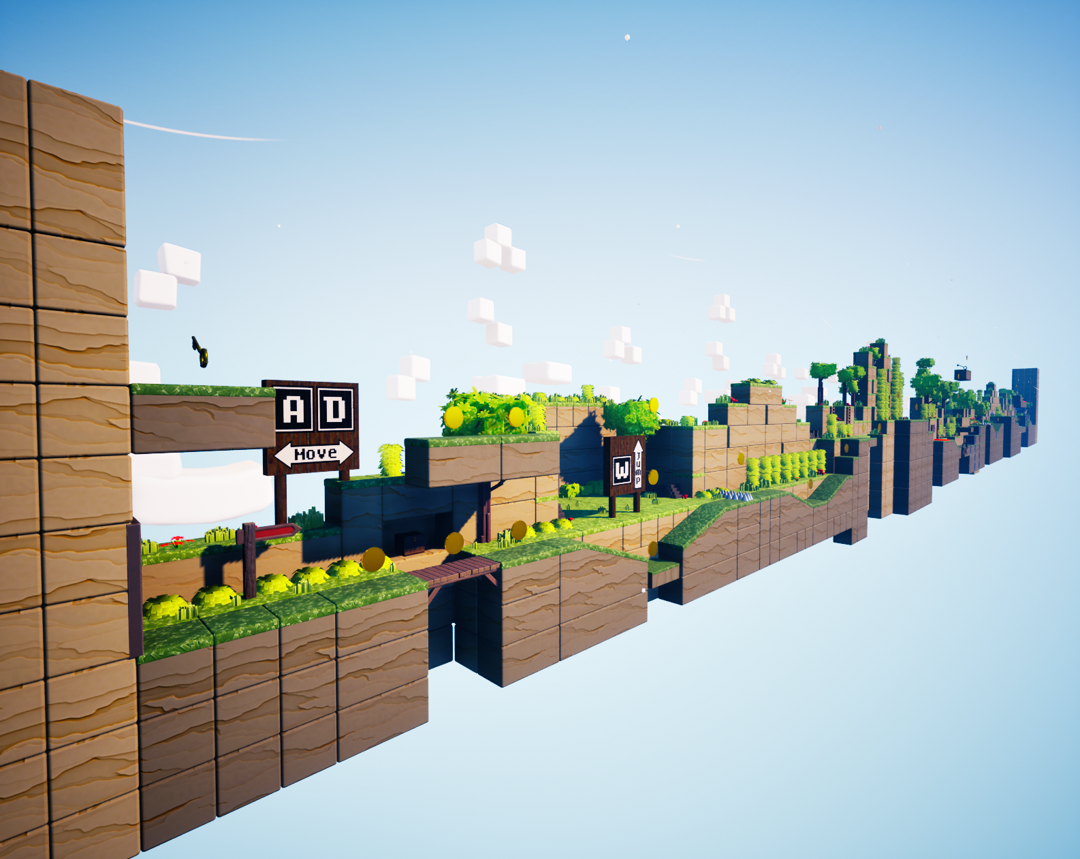
Gameplay
Features & Technical Breakdown
Gameplay Systems
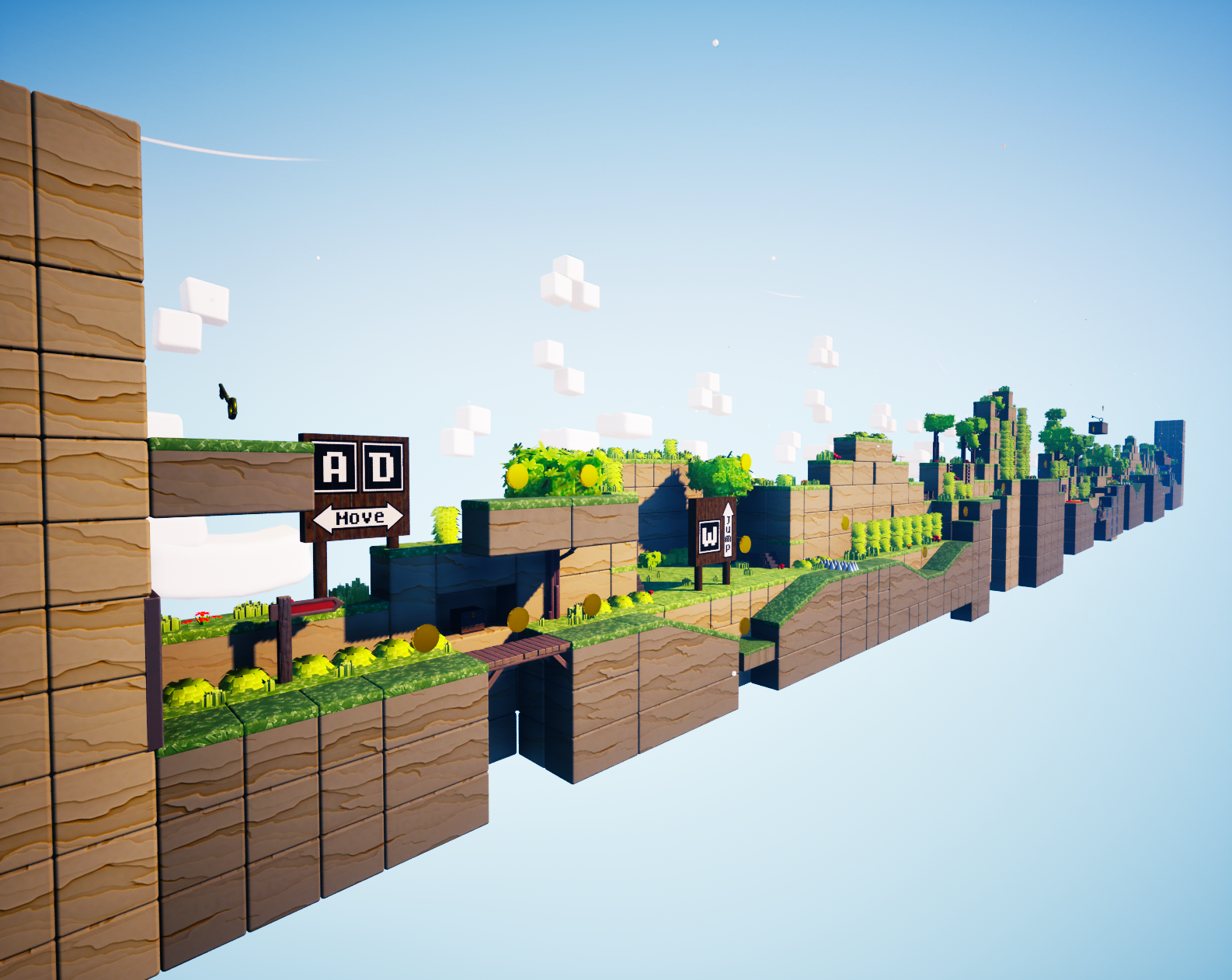
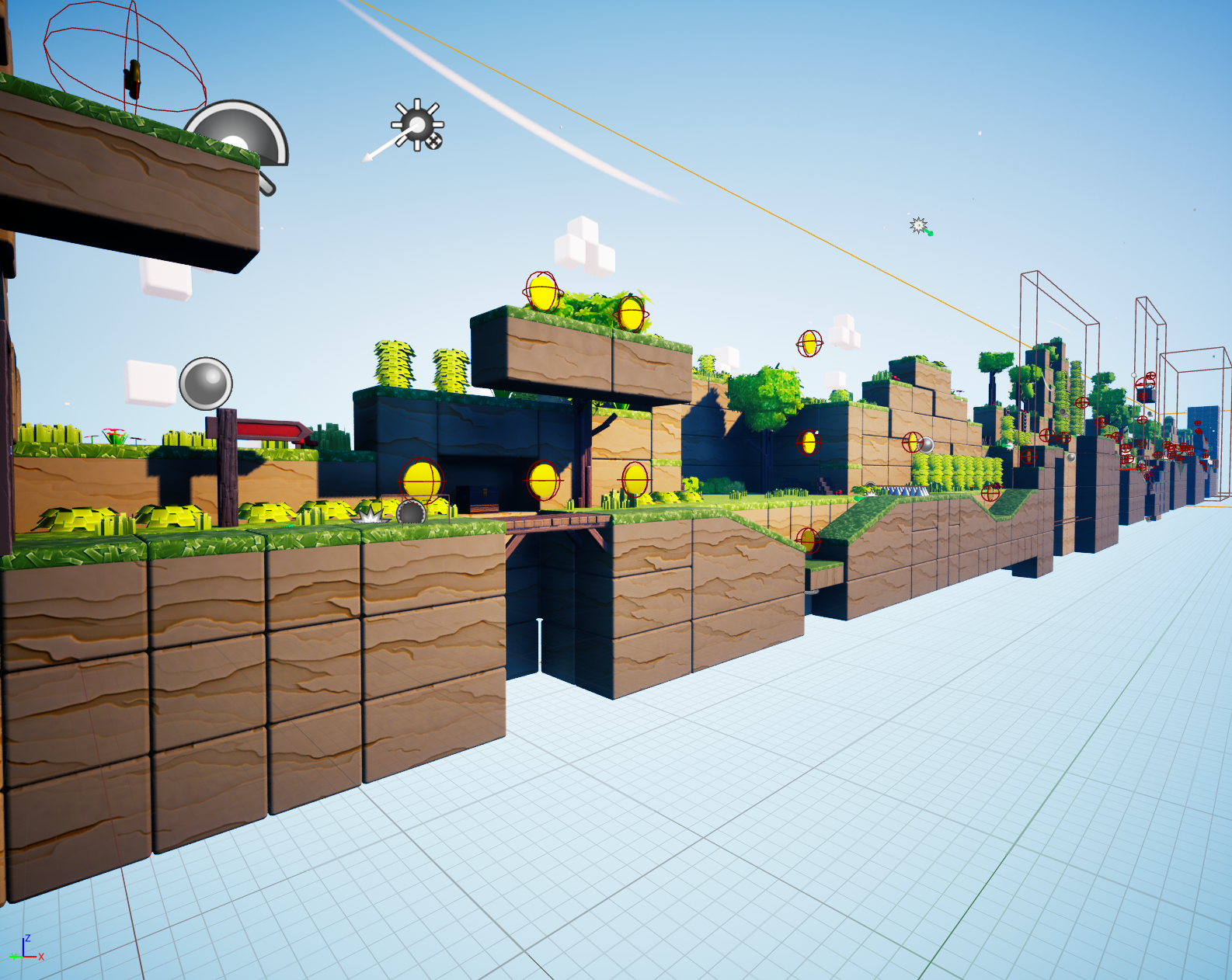
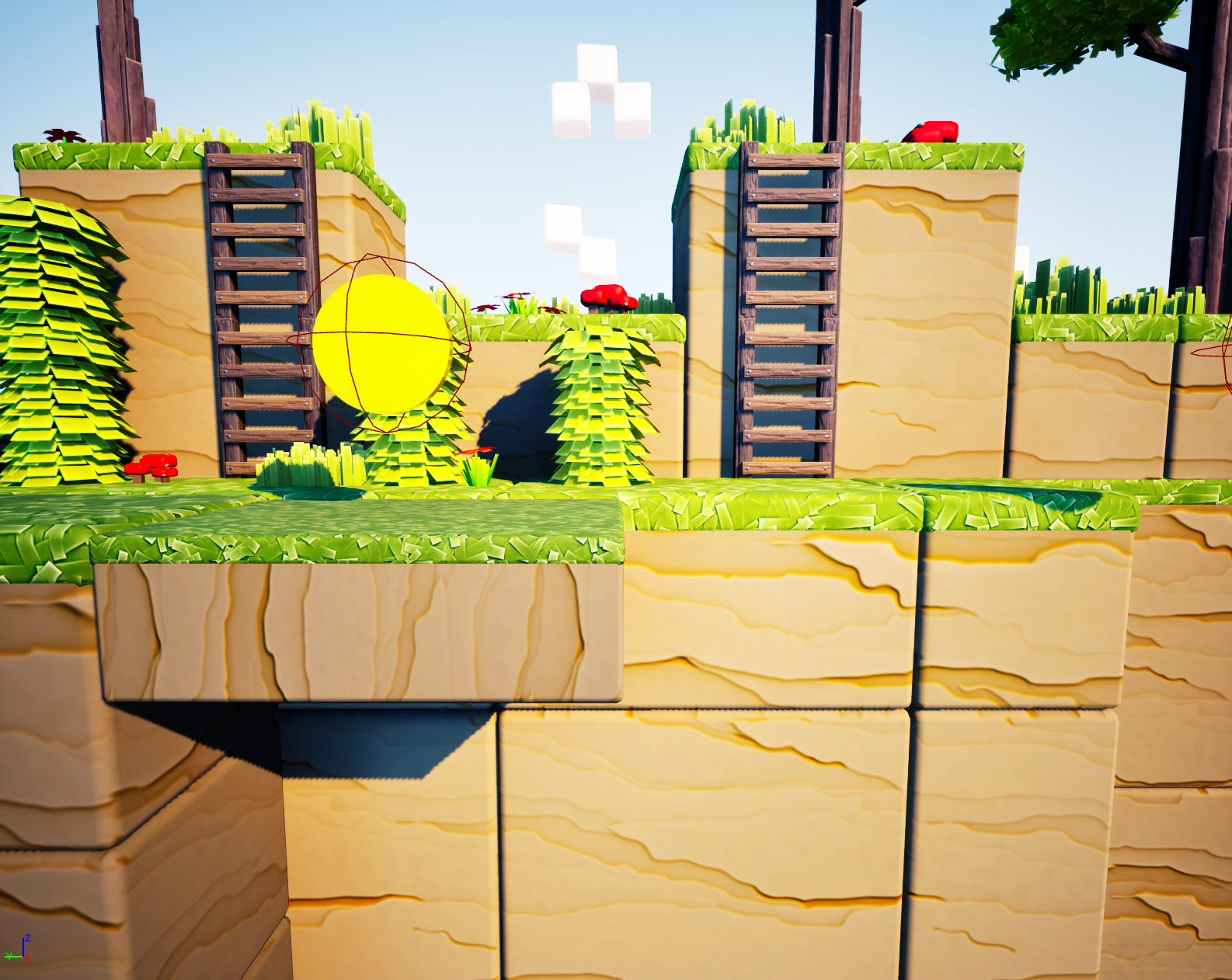
~~ Core Gameplay ~~ • Developed a complete 3D platforming gameplay loop. • Implemented custom player movement and traversal systems. • Designed progression through multiple difficulty-scaled level sections. ~~ Interactive Elements ~~ • Developed moving platforms and lift systems. • Implemented environmental hazards including lasers and spikes. • Developed collectible and reward systems incorporating keys, chests, and coin pickups. ~~ Player Experience ~~ • Implemented cinematic camera transitions. • Developed save/load functionality for player records and high scores. • Created a fully functional settings menu.
Technical Challenges
~~ Challenge: Rapid Development ~~ The project was developed within an eight-week timeframe, requiring careful prioritisation of features and development effort. To maintain progress, I focused on rapidly prototyping gameplay systems using Blueprints before refining them through iteration, allowing key mechanics to be tested and validated early in development. ~~ Challenge: Scope Management ~~ The initial design scope exceeded what could realistically be delivered within the available development time. Throughout development, I continuously evaluated feature priorities and adjusted scope to ensure a complete and playable experience could be delivered without compromising core gameplay functionality. ~~ Challenge: Gameplay Readability ~~ Platforming challenges needed to be immediately understandable while still providing increasing difficulty. To achieve this, level sections were structured around progressively more complex obstacles and traversal challenges, allowing players to gradually learn and master mechanics.
Results
• Developed a complete playable game within an eight-week production cycle. • Delivered a full gameplay loop from concept through final implementation. • Successfully applied rapid prototyping workflows to gameplay development. • Gained practical experience balancing scope, iteration, and production deadlines. • Implemented and integrated all gameplay systems as a solo developer.
Gallery