Word Race
Gameplay
Features & Technical Breakdown
Features
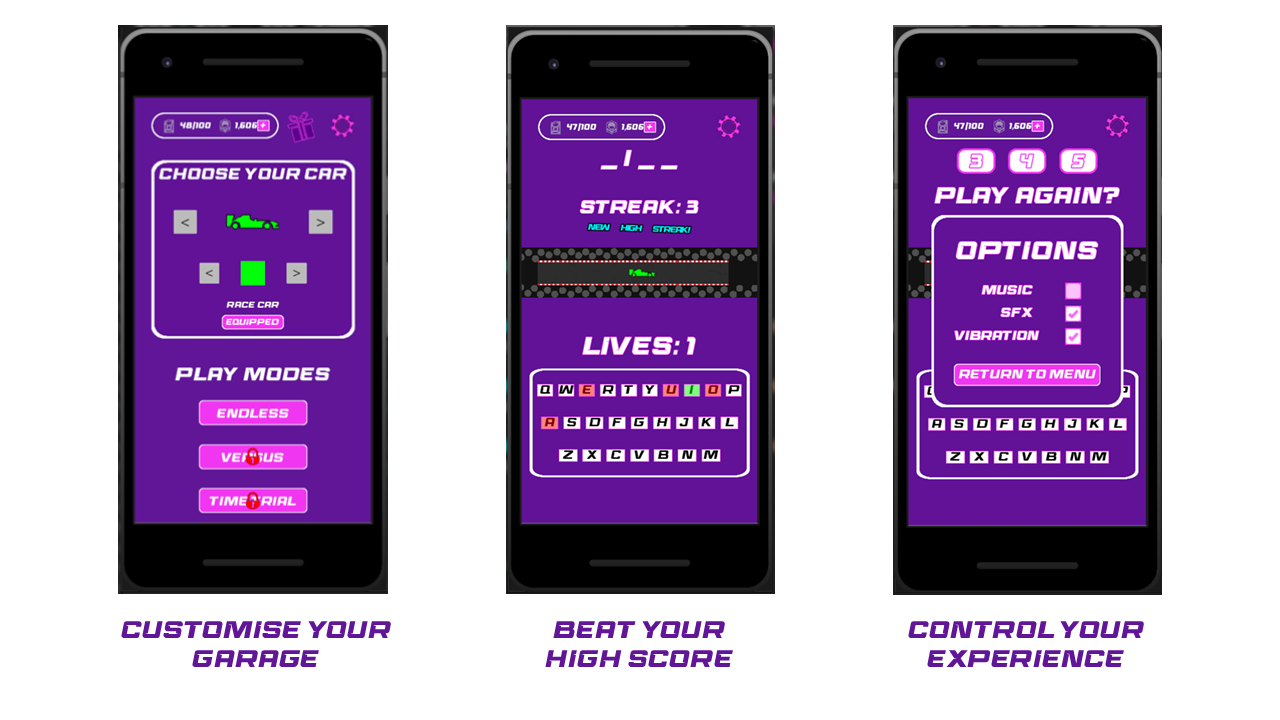
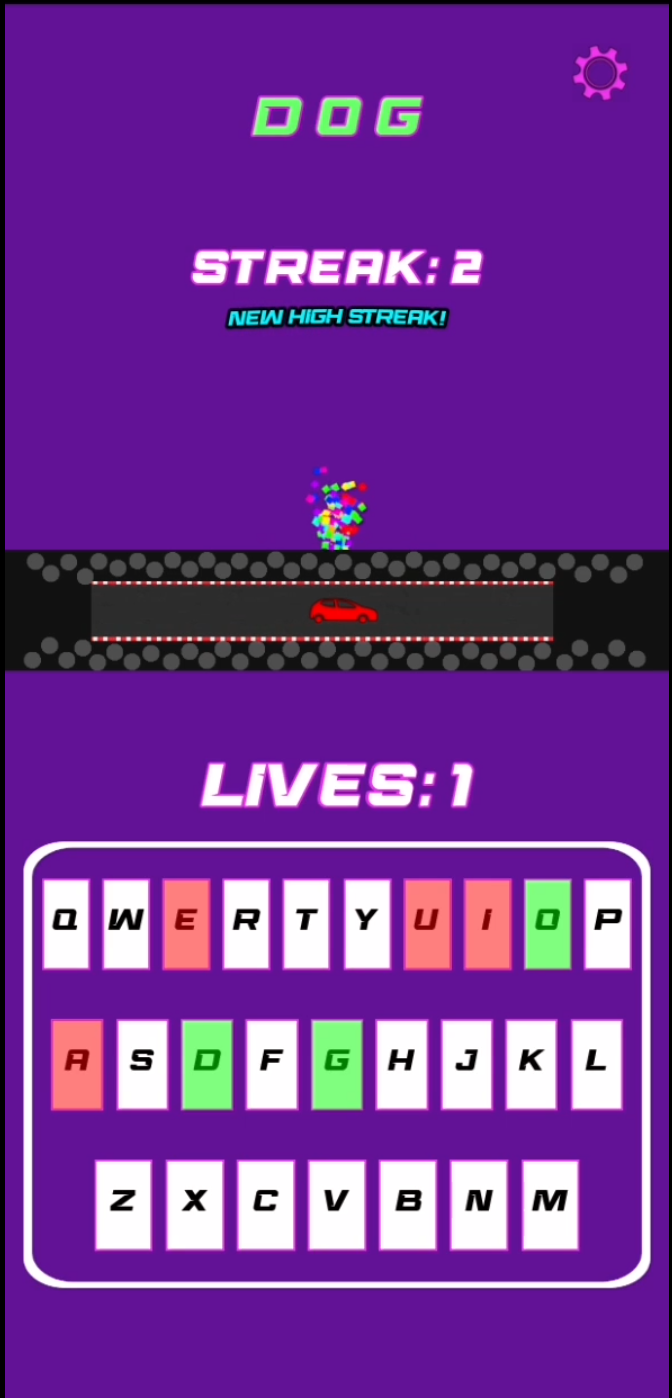
~~ Gameplay Systems ~~ • Developed a data-driven word generation system using Unreal Data Tables in preparation for localisation. • Implemented life, scoring, and resource management systems tied to gameplay progression. • Created garage progression systems tied to gameplay performance. • Developed an endless gameplay mode with milestone-based rewards to encourage replayability. • Designed a thematic fuel-based energy system to support progression and session pacing. ~~ UI Systems ~~ • Developed mobile-centric UI and navigation systems. • Developed a data-driven UI theming system using Unreal Engine Data Assets, allowing future seasonal events and visual updates without UI rewrites. • Structured UI widgets using reusable parent classes and consistent hierarchy patterns to simplify future expansion. ~~ Android Compatibility ~~ • Implemented Android deployment and testing workflows. • Integrated Google AdMob monetisation systems in preparation for production deployment.
Technical Challenges
~~ Challenge: Data-Driven Content ~~ Game depth and world quantity needed to be easily expandable, without requiring any game code modification. To solve this, I made use of Unreal Engine's Data Tables. This allowed me to add new content in the structure that I had created, either manually or in bulk using an CSV file. The architecture was designed to support future expansion through alternative data sources, including JSON-based content pipelines and online services to further remove reliability on in-engine changes. ~~ Challenge: Blueprint to C++ Migration ~~ The original prototype was developed almost entirely in blueprint, minus minor XML code to deal with Android storage permissions. As the project grew, maintaining increasingly complex gameplay systems (especially if I were to pivot to some form of multiplayer in the near future) would become more difficult. To ensure that scalability and maintainability were prioritised, I began migrating the core gameplay systems in C++. This allowed me to preserve existing functionality, while creating a more robust backend. This also had the added benefit of significantly improving my first hand experience with the engine's relationship between C++ and Blueprint, and its hybrid workflow. ~~ Challenge: Mobile UI Design ~~ Unlike desktop games, mobile gameplay required a bigger focus and careful consideration when it came to user experience; specifically screen space and controls. I iterated through several designs and layouts for the content on each page to create an interface that was equally as readable and responsive as it was intuitive and aesthetic. All of this remained true whilst still providing an efficient vessel for the gameplay itself.
Results
• Demonstrated at GradEx 2025 (Staffordshire University). • Successfully tested on Android devices. • Currently undergoing a C++ backend refactor.
Gallery